

The best institute is the one that can prove trainer quality, practical learning, student support, and real outcomes.
Choosing the best digital marketing institute in Perinthalmanna requires more than comparing course fees or reading promotional claims.
Many institutes advertise expert trainers, live projects, internships, certificates, and placement assistance. However, students should ask for proof before making a payment.
Digital marketing is a practical career field. Employers may ask candidates to audit a website, plan social media content, create an advertisement, study campaign results, or explain why a business is not visible in Google search.
A certificate can support a job application, but it cannot replace practical ability.
This 10-point checklist will help you compare institutes based on training quality, student support, project experience, fees, and verifiable outcomes.
Why Choosing the Right Institute Matters
Choose an institute based on practice, feedback, and verified outcomes rather than advertising claims.
A digital marketing course should prepare students to complete real tasks.
Digital marketing includes several skill areas, including:
- Search engine optimization
- Social media marketing
- Content writing
- Paid advertising
- Website planning
- Email marketing
- Analytics
- Local business marketing
- E-commerce marketing
SEO means making a page more visible in Google search results.
A course that only explains definitions may not prepare students for interviews, freelance work, or client projects. Students need practice, corrections, and clear feedback.
Local detail: Students in Perinthalmanna may compare nearby classroom programmes with courses in Malappuram, Kozhikode, Kochi, or online.
Trade-off: A local institute reduces travel time, while an online or distant programme may provide access to a wider range of trainers.
Unpopular truth: A well-known institute can still provide weak individual support when batches are too large.
Use These 10 Checks Before Joining
A good institute should pass all ten checks before a student pays the full course fee.
1. Check Whether the Syllabus Matches Real Work
A useful digital marketing course should include:
- SEO
- Social media marketing
- Google Ads
- Social media advertising
- Content planning
- Website basics
- Email marketing
- Analytics and reporting
- Local SEO
- E-commerce fundamentals
- Responsible use of artificial intelligence tools
Do not judge the syllabus by the number of tools listed.
Ask what students will create during each module.
For example, “Google Ads” is only a subject name. A practical learning outcome would be:
- Select campaign goals
- Research keywords
- Write advertisements
- Plan a budget
- Review campaign results
Trade-off: A wide syllabus provides exposure to more topics, while a focused syllabus may provide greater depth.
2. Verify the Trainers’ Current Experience
Ask who will teach each module.
Find out whether the trainers have recently worked on websites, advertising campaigns, analytics reports, content plans, or client accounts.
Ask these questions:
- Who teaches SEO?
- Who teaches paid advertising?
- Are trainers permanent or visiting faculty?
- Can the institute show examples of trainer work?
- How often is the syllabus updated?
- Who reviews student assignments?
Red flag: The counsellor talks about the institute’s history but does not identify the actual trainers.
Local detail: Trainers should understand Malayalam content, Kerala customer behaviour, and local business search patterns.
3. Inspect the Practical Assignments
Ask to see anonymised examples of previous student work.
Useful assignments may include:
- Website audits
- Keyword research sheets
- Social media calendars
- Advertisement drafts
- Local SEO reviews
- Landing-page analysis
- Analytics reports
- Campaign plans
The institute should also explain how assignments are reviewed.
Submitting an assignment is not enough. Students need feedback that shows what was correct, what was weak, and how to improve it.
Unpopular truth: Ten poorly reviewed assignments may be less useful than three carefully corrected projects.

4. Confirm Access to Live Projects
A live project involves a real website, business, campaign, or audience.
Ask whether students actively work on projects or only watch the trainer complete them.
Students may contribute to:
- Website audits
- Social media plans
- Advertisement writing
- Keyword research
- Local business listings
- Campaign reports
- Content calendars
Ask what evidence students can include in their portfolios.
Useful evidence may include:
- Project brief
- Approved content sample
- Audit document
- Campaign screenshot
- Trainer feedback
- Final project summary
Client passwords, customer information, and private campaign data should never be shared without permission.
Trade-off: Simulated projects are safer for beginners, while real projects provide stronger work experience.
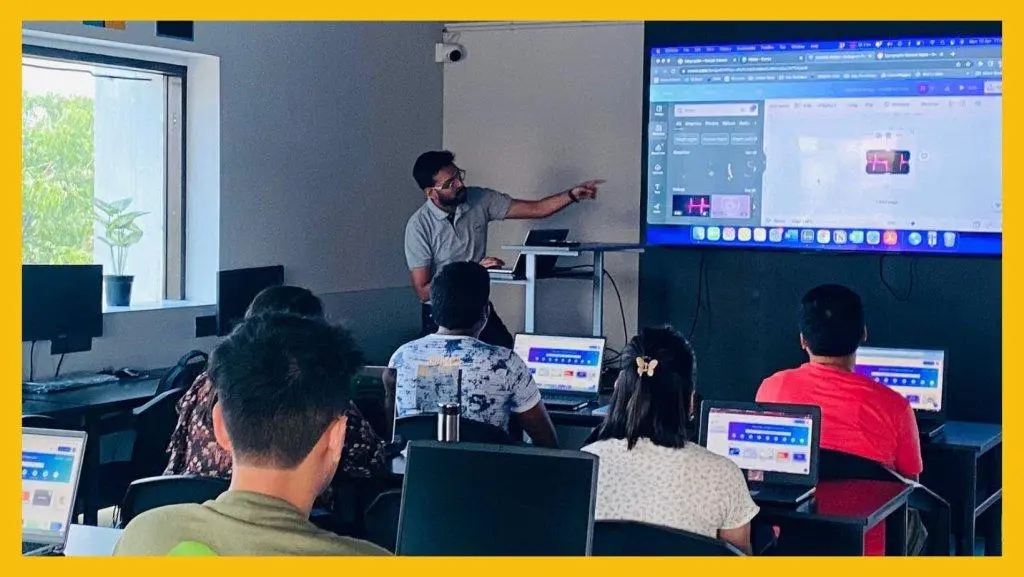
5. Attend a Real Demo Class
Do not make a decision based only on a counselling session.
A demo class should help you observe:
- The trainer’s teaching style
- The level of student participation
- How clearly terms are explained
- Whether practical examples are used
- How questions are answered
- The batch size
- Classroom equipment
- Internet quality
Ask to attend a normal class rather than a special session created only for new students.
Local detail: During the Kerala monsoon, ask whether missed sessions can be attended in another batch or viewed through recordings.
6. Check Batch Size and Trainer Access
Smaller batches may make it easier to ask questions, but batch size alone does not prove quality.
Ask:
- What is the maximum batch size?
- Is a teaching assistant available?
- How are doubts handled outside class?
- How quickly are assignments reviewed?
- Are individual mentoring sessions available?
- Is support available after course completion?
A batch of 25 students may work well when there are clear feedback systems. A batch of eight may still be weak when the trainer gives little individual attention.
Unpopular truth: “Personal mentoring” may sometimes mean only access to a common messaging group.
7. Examine the Internship Structure
An internship should include real tasks, supervision, deadlines, and feedback.
Ask whether the internship is:
- Internal or external
- Paid or unpaid
- Full-time or part-time
- Remote or office-based
- Included in the fee
- Guaranteed or subject to selection
- Supervised by a named person
The word “internship” should not be used for additional classroom lessons.
A meaningful internship should provide:
- Assigned work
- A reporting manager
- Deadlines
- Feedback
- Work samples
- A completion record
Trade-off: Internal internships are easier to manage, while external internships may expose students to different companies and work cultures.
8. Verify Placement Claims
Treat claims such as “100% placement” carefully.
Ask the institute to explain what placement support includes.
It may refer to:
- Interview preparation
- Resume support
- Job alerts
- Employer referrals
- Internship opportunities
- Interview scheduling
These services are not the same as a guaranteed job.
Ask for recent placement details, including:
- Student name
- Course completed
- Employer
- Job role
- Placement date
- Full-time, internship, or freelance status
Where possible, check public professional profiles or speak with former students after receiving their permission.
Red flag: Placement posters contain company logos but do not show student names, job titles, or dates.
9. Compare the Total Cost
Do not compare only the advertised tuition fee.
Ask whether the total cost includes:
- Registration fee
- Tuition fee
- Examination fee
- Certificate fee
- Software subscriptions
- Advertising practice budget
- Internship charges
- Rescheduling charges
- Laptop requirements
- Travel expenses
| Cost Item | Amount or Unit to Confirm | Verification Date |
|---|---|---|
| Tuition Fee | Written quotation in ₹ | July 2026 |
| Registration Fee | Amount in ₹ | July 2026 |
| Advertising Budget | Amount per student in ₹ | July 2026 |
| Software Subscriptions | Monthly cost in ₹ | July 2026 |
| Internship Fee | Included or additional | July 2026 |
| Certificate Fee | Amount per certificate in ₹ | July 2026 |
| Travel Cost | Estimated monthly amount in ₹ | July 2026 |
A lower-fee course may reduce the initial expense, but limited feedback may increase the time needed to become job-ready.
A higher fee also does not guarantee better teaching.
Ask for the complete fee structure in writing.
10. Review the Agreement and Refund Terms
Before paying, request copies of:
- Admission form
- Fee schedule
- Refund policy
- Attendance rules
- Course duration
- Batch-transfer policy
- Internship terms
- Placement-support terms
- Certificate requirements
Do not depend only on verbal promises.
Pay through a traceable method and keep receipts, messages, quotations, and written commitments.
Red flag: The institute pressures you to pay immediately because an offer supposedly expires within a few hours.
Professional review advised when an agreement contains unclear refund, financial, or employment guarantees.
What Should a Good Digital Marketing Course Cover?
A good course teaches planning, execution, measurement, and improvement rather than isolated tools.
A useful course should show how different digital channels work together.
Students should understand how:
- Search brings visitors to a website
- Social media builds awareness
- Advertisements create enquiries
- Landing pages support conversions
- Analytics measures results
- Content supports trust
- Email supports follow-up
CRO means helping website visitors take a desired action, such as making an enquiry or purchasing a product.
A good course should also cover:
- Customer privacy
- Advertising policies
- Copyright
- Responsible data use
- Honest reporting
- Ethical use of artificial intelligence
Trade-off: Tool-based teaching helps students begin quickly, while strategy and measurement skills remain useful when tools change.
How Long Should a Digital Marketing Course Be?
Guided practice hours matter more than the number of months printed in a brochure.
There is no single course duration that suits every student.
A short course may suit a business owner who needs basic marketing knowledge.
A longer programme may suit a fresher who needs:
- Foundation lessons
- Practical assignments
- Live projects
- Internship experience
- Portfolio support
- Interview preparation
Ask how many hours are spent on:
- Trainer-led classes
- Practical work
- Assignment reviews
- Project mentoring
- Internship tasks
- Interview preparation
Unpopular truth: A six-month course is not automatically better than a three-month course. A longer programme may include repeated lessons or inactive periods.
Should You Choose Classroom or Online Training?
Choose the learning format that gives you consistent practice, feedback, and accountability.
Classroom training may suit students who prefer:
- A fixed schedule
- Face-to-face communication
- Local networking
- Direct trainer support
- A structured study environment
Online training may suit:
- Working professionals
- Students living far from town
- Parents
- Freelancers
- Learners who need flexible timing
Local detail: A student travelling to Perinthalmanna from a nearby town should calculate monthly travel costs and travel time before deciding that classroom training is cheaper.
Trade-off: Classroom learning provides direct interaction, while online learning reduces travel and may provide access to more trainers.
Which Digital Marketing Certifications Are Useful?
Certifications support a portfolio, but they cannot replace proof of practical ability.
Certifications may show that a student has studied a platform or subject.
Useful certification areas include:
- Search advertising
- Display advertising
- Web analytics
- Social media advertising
- Content marketing
- Email marketing
- E-commerce
- Digital marketing fundamentals
Ask whether the institute prepares students for recognised platform examinations or only provides its own completion certificate.
A certificate has more value when the student can also show:
- A website audit
- A content plan
- An advertising campaign
- A reporting document
- A portfolio case study
Unpopular truth: Several basic certificates may be less useful than one well-explained project with clear evidence.
What Should a Student Portfolio Include?
A strong portfolio explains the problem, the work completed, the result, and the lesson learned.
A beginner portfolio does not require famous clients.
It may include:
- A local business website audit
- Keyword research
- A monthly social media plan
- Sample advertisements
- A landing-page improvement plan
- A simple analytics report
- A local SEO review
- A campaign case study
Each portfolio item should explain:
- The task
- The audience
- The method
- The tools used
- The result
- The limitation
- The next recommended step
Do not publish customer details, passwords, private reports, or advertising account information without written permission.
Avoid These Institute-Selection Mistakes
Hidden fees, vague placement claims, and payment pressure are major course-selection warning signs.
Choosing only by price
The cheapest programme may lack projects or feedback. The most expensive course may still provide poor value.
Trusting social media follower counts
A large following does not prove trainer quality or student results.
Accepting vague live-project claims
Ask what students do, who supervises them, and what evidence they receive.
Believing every testimonial
Look for detailed reviews that mention:
- Trainer name
- Course completed
- Practical work
- Internship
- Employment result
Ignoring refund rules
A verbal refund promise may be difficult to prove.
Joining without a demo class
A counselling session does not show how a trainer conducts a real lesson.
Expecting an automatic job
An institute may provide placement support, but hiring also depends on:
- Practical ability
- Communication
- Portfolio quality
- Interview performance
- Available vacancies
- Employer requirements
Main red flags
- Guaranteed salary without written terms
- No complete syllabus
- No trainer names
- No assignment examples
- Placement claims without dates
- Hidden software costs
- Same-day payment pressure
- No refund policy
- Copied student portfolios
- Poor protection of client data
A Practical Perinthalmanna Comparison
The stronger institute is the one that can prove better learning support, not the one with the loudest promotion.
Imagine a student comparing two fictional institutes.
Institute A
- Lower advertised fee
- Large social media following
- Many software tools listed
- No named trainer
- Limited assignment feedback
- Placement assistance not clearly defined
- No student portfolio examples
Institute B
- Slightly higher fee
- Named trainers for each module
- Weekly reviewed assignments
- Two supervised projects
- Written internship conditions
- Recent student portfolios
- Clear refund and transfer rules
Institute A may appear attractive because it is cheaper and more visible.
Institute B provides stronger evidence of teaching quality and student support.
This does not mean that higher fees always indicate better quality. It means that students should compare evidence rather than first impressions.
A useful question to ask every institute is:
“Can you show me what an average student creates before completing the course?”
Students may include Dexta Digital Marketing Academy in their comparison, but the same checklist should be applied to every shortlisted institute.
Checklist 1: Before the Demo Class
Do this now:
- Request the complete syllabus.
- Ask for trainer names.
- Request the total fee in writing.
- Ask whether advertising practice requires an extra budget.
- Request internship conditions.
- Request placement-support details.
- Ask to attend a normal class.
Proof you keep: Syllabus, fee quotation, screenshots, messages, and enquiry date.
Checklist 2: During the Demo Class
Do this now:
- Observe how clearly the trainer explains the topic.
- Ask one practical question.
- Check the number of students.
- Ask how assignments are reviewed.
- Request one anonymised student project.
- Check classroom equipment and internet quality.
- Ask how missed sessions are handled.
Proof you keep: Demo date, trainer name, notes, and project details.
Checklist 3: Before Payment
Do this now:
- Compare at least three institutes.
- Read the refund policy.
- Confirm the batch start date.
- Confirm the course-completion requirements.
- Ask which benefits are guaranteed.
- Pay through a traceable method.
- Keep a receipt for every payment.
Proof you keep: Admission form, payment receipt, refund policy, and written promises.
Frequently Asked Questions
Direct questions about projects, trainers, and outcomes reveal more than general questions about reputation
Which is the best digital marketing institute in Perinthalmanna?
The best institute depends on your goals, budget, schedule, and current skill level. Compare curriculum, trainer experience, practical assignments, live projects, internship conditions, and verified placement evidence.
Is digital marketing suitable for beginners?
Yes. A beginner-friendly programme should explain terms clearly and gradually move from basic lessons to practical projects. Advanced technical knowledge is usually not required.
Is a certificate enough to get a digital marketing job?
No. A certificate may support your application, but employers may also check your portfolio, practical skills, communication, and ability to explain campaign results.
How can I verify placement claims?
Ask for recent student names, employers, job roles, and placement dates. Confirm whether each result was a full-time job, internship, or freelance project.
Should I choose a course with an internship?
An internship can be useful when it includes real work, supervision, deadlines, and feedback. Ask whether it is guaranteed, paid, internal, external, or subject to selection.
Is online training better than classroom training?
Neither format is always better. Classroom training provides routine and direct interaction, while online training reduces travel and provides more flexibility.
How much should a digital marketing course cost?
Fees vary according to course duration, trainer access, projects, internship support, facilities, and included software. Request the complete cost in writing before paying.
What should I ask during a demo class?
Ask who teaches each module, how assignments are reviewed, what projects students complete, and what placement assistance includes.
Can an institute guarantee a job?
Be cautious about unconditional job guarantees. An institute may provide training, referrals, and interview support, but actual hiring depends on employers and candidate performance.
Can students compare Dexta with other institutes?
Yes. Apply the same ten checks to Dexta Digital Marketing Academy and every other shortlisted institute. Use written evidence rather than unsupported rankings.
Ready to Compare Institutes?
Using the same evaluation criteria for every shortlisted institute makes comparisons more objective and consistent.
Download or recreate this 10-point checklist and use it while visiting every institute on your shortlist.
Score each institute based on:
- Curriculum
- Trainers
- Practical assignments
- Live projects
- Internship
- Placement support
- Student portfolios
- Course cost
- Batch support
- Written policies
Comparing every institute using the same checklist makes your decision more objective and reduces the chances of choosing based on marketing alone.
Choosing an institute based on verified evidence and practical learning can help students make a more informed career decision.
Selecting a digital marketing institute in Perinthalmanna is an important step towards building practical skills and preparing for future career opportunities. Instead of relying only on advertisements, course fees, or placement claims, compare each institute using clear and consistent criteria such as curriculum quality, trainer experience, assignment feedback, live projects, internship structure, placement support, and written policies.
Take time to attend a demo class, ask practical questions, and request written information before making a payment. A course that provides regular feedback, hands-on projects, and structured learning is more likely to help you build a strong portfolio and develop the skills expected by employers.
Before making your final decision, use this 10-point checklist to compare every shortlisted institute. A careful comparison today can help you choose a course that supports your long-term learning and career goals.
Ready to Choose the Right Digital Marketing Institute?
Use this 10-point checklist to compare every shortlisted institute before making a decision. Review the syllabus, meet the trainers, verify placement support, and attend a demo class to choose a course that matches your career goals.
About The Author

Raees Addox
Raees Addox is a digital marketing leader with 7+ years of industry experience, working at the intersection of digital marketing, sales, and AI. He is the Co-Founder of Addox Digital and Co-Founder & CEO of Dexta Academy.
0 Comment